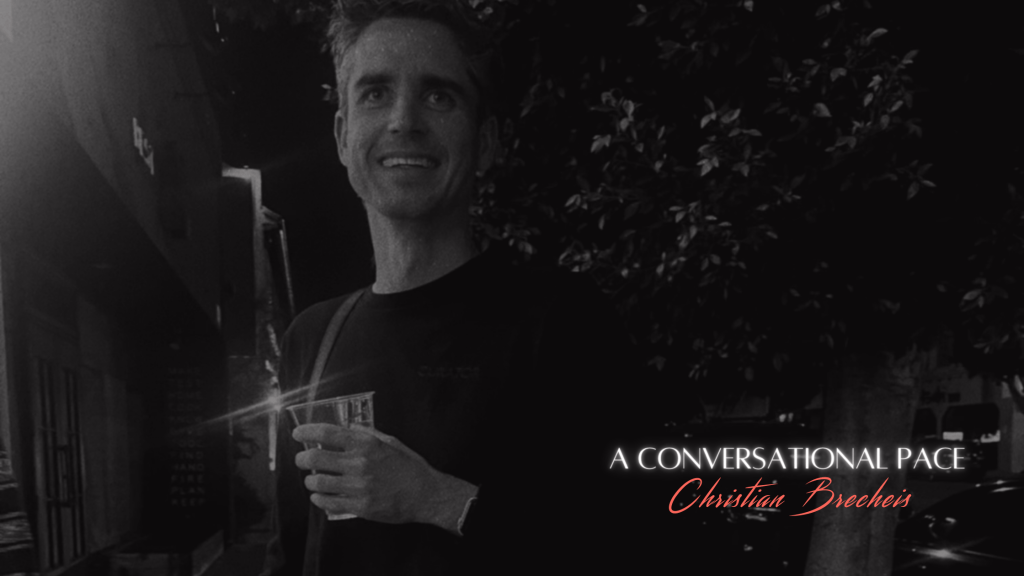
There’s a spectrum [to motivation]. It makes me happy to just flow along the river here in Munich. I’m not very creative with my routes on my regular runs, I’m just happy to get in the zone, no music, taking it all in. – Christian Brecheis
I don’t know. I guess it was, like, 2 years ago or something (Christian may have to fact-check me here), when my buddy Jeremy (from prior Conversational Pace fame) sent me a link to Near Earth. Along with the link, a note: “Socks. For running.” (Jeremy is a man of few words, which, I suppose mirrors his business ethos nicely… Own fewer, better things. Say fewer, better things.)
Holy shit, tangents.
If you were able to get through that first section, great. Let’s get into this. I found out about Near Earth a while back, as mentioned. Shortly after, because I’m highly susceptible, I got a few pairs (one white, one black), and immediately began running in them. This was when I realized socks could be better than just… socks. So I looked into the company more and realized that Near Earth is not massive. It’s not got a lot of fanfare around it, but holy fucking shit, it needs it.
And you see where this is going… We’re talking shop with Christian Brecheis on the Conversational Pace; chatting about brand vision, the absence of a life mantra, time as an unfortunate luxury, the benefits of making it challenging to hang out with yourself, and how we were so so close to going extinct.
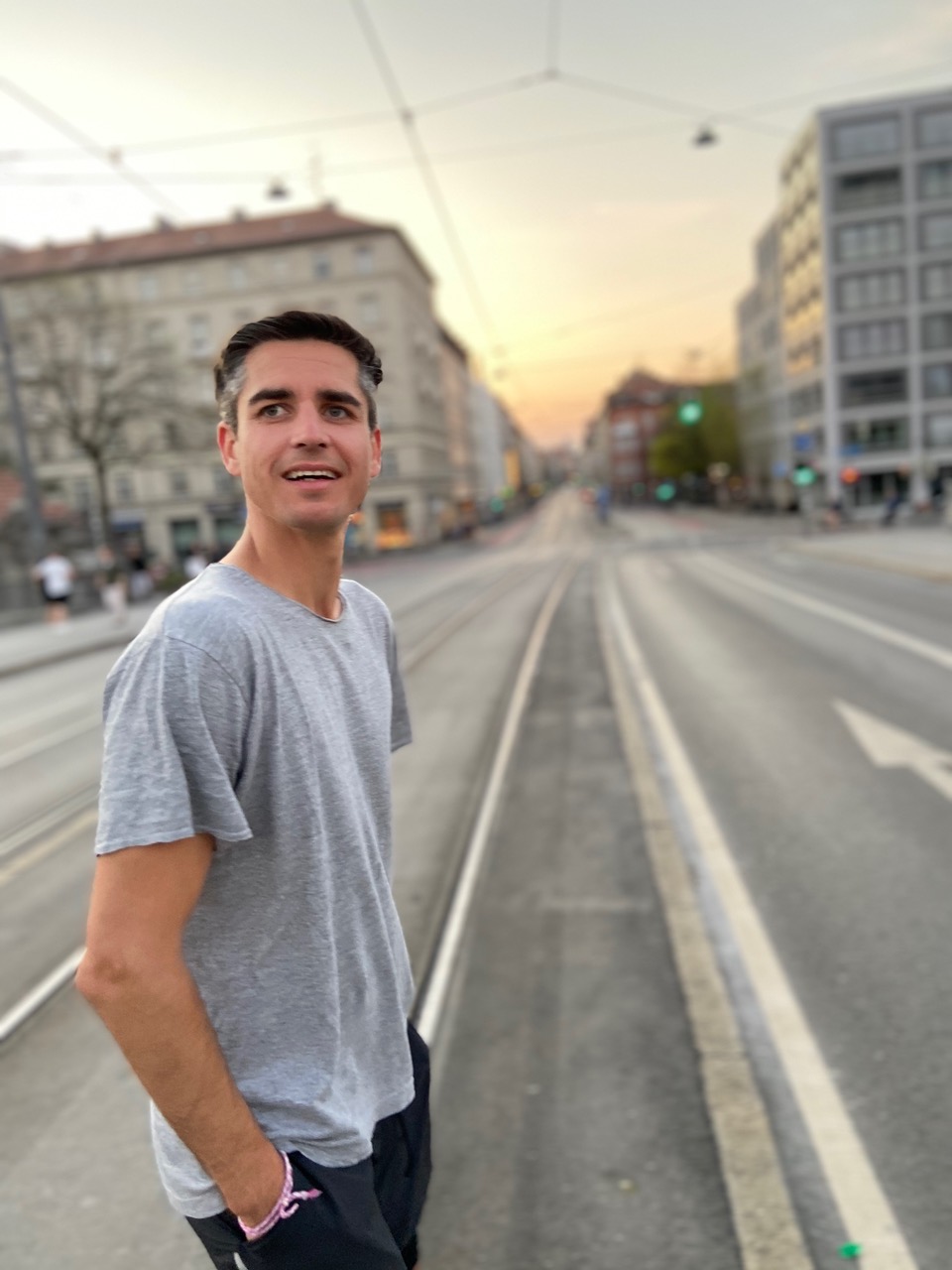
Leggggs: Hey Christian. Appreciate you hanging out with us today. Let’s start easy: A little background on you.
Christain Brecheis: Hello! I’m Christian Brecheis. I’m living in Munich with my family. I enjoy pizza making, side country snowboarding and traveling – on all of these things I could spend more days on.
Professionally, I’m a photographer and not too long ago, launched a running brand adventure called Near Earth.
Leggggs: I like asking because it kinda sets the tone for the rest of the chat: What is your life mantra, or maybe, like a personal mission in life?
CB: No mantra. Life is constant learning, I don’t have a mantra that sounds open-minded for that, I also might change my opinion.
Leggggs: Very, very fair and even-keeled. I support that. Or I don’t. But I do. I need a soundbite for the blog, so if you had to sum yourself up in one sentence… Like, you had to… I’m forcing you to… what is it?
CB: At the intersection of imposter syndrome and first-world problems.
Leggggs: Because I am so utterly lonely*, I’ve been doing some research on movement and how “a body in motion leads to a happier mindset, and overall better mental health” (and feelings of being less lonely).
This heaviness leads me to ask, outside of running, what do you do to keep your body in motion, and your mind and soul happy?
CB: Snowboarding is very high on that list. A day on the mountains, some tree runs in good snow make me sustainably happy. Then again simple pleasures, I can have a perfect day and don’t need much or anything at all. Going to the river with my kids on a sunny day, perfect.
Leggggs: I just went riding for the first time in ~12 years, and every chill-vibe memory came flooding back liek I never left the hill. I get that. Love it.
Do you feel there’s a relation between finding personal happiness through focusing on your own wellness, and becoming a more active participant in the world at large?
Said differently, does being happier with yourself makes it easier to be part of community and therefore feel less lonely? How? Why?
CB: I like that you’re researching on movement and how it leads to a happier mindset. When I read about the Greek philosopher Aristotle, I thought he could be a brilliant copywriter for a L.A. well-being startup, but it’s actually more serious, we’ve known and struggled with that for thousands of years. The Greek philosophers were not just theoreticians; they were also interested in practical wisdom gained through life experiences. Physical activities were seen as a means to gain insights into the human condition and to foster a more well-rounded understanding of the world.
I’d say, let’s take this to a bar to have an evening-long conversation exploring that.
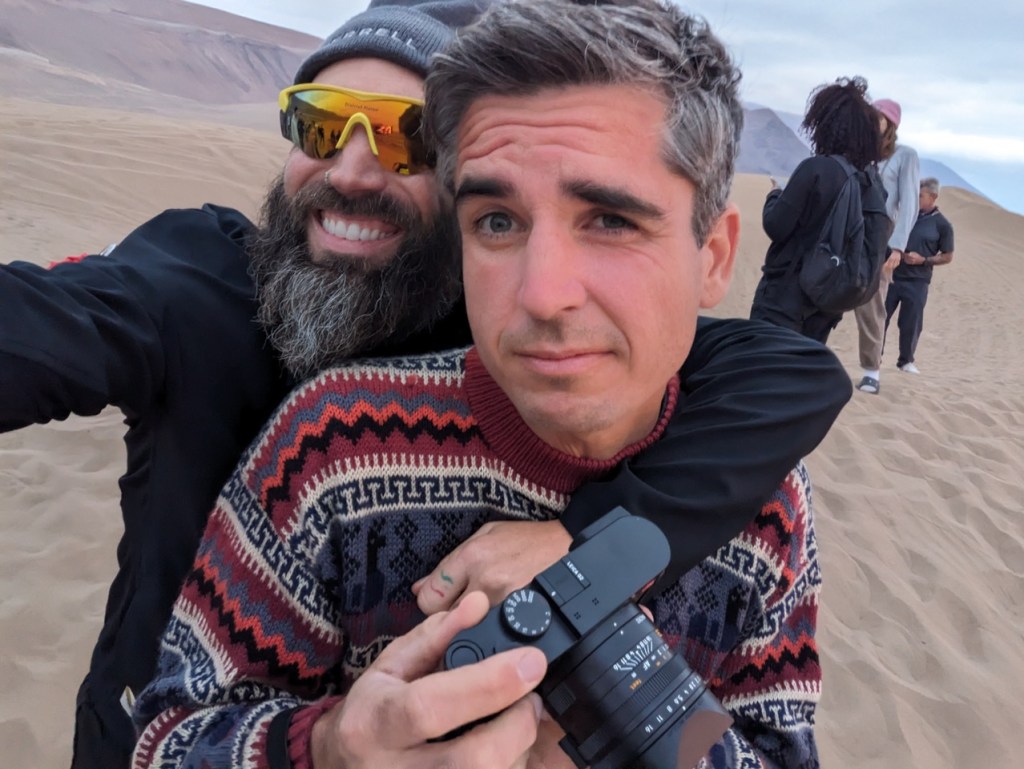
Leggggs: Fair enough. I’ll get my ass to Munich then for this evening-long convo.
When thinking about your own personal wellness, what do you find to be the biggest barrier to taking time for yourself to become a better person for the world at large?
CB: Time became luxurious although it shouldn’t be. We’re all in this rat race. Back in the day, I was in this freelance and athlete bubble, as a creative you weren’t booked every day of the week and a professional snowboarder also had some free time on their hands. The people around me had time for what made them happy.
That bubble became smaller as we started living a more structured life with kids and school holidays. Now there’s less and less time that’s not already scheduled.
To make it worse, a lot of parents over-schedule their kids’ lives because they need time for their stuff, usually work.
But hey, family first if someone is asking.
Time became luxurious, although it shouldn’t be.
Leggggs: Switching gears slightly, I think we should talk a bit about running in general. It’s sorta part of my audience’s interest, I think.
How did you get into this whole thing?
CB: I always had an active lifestyle, running was something I did cluelessly hoping to gain some additional fitness. I remember going on runs with a Discman with antiskip that didn’t work. However, I didn’t look at running as a sport when I was in my early 20s.
I was a snowboard photographer back then, I spent around 100 days on the mountain a year, and my motivation was keeping up with professional athletes on hikes in deep snow while I was carrying a camera backpack.
Leggggs: The specific callout of a discman with anti-skip that didn’t work. Only a few people will understand that, and I appreciate it so much. So what was the motivation to get into running?
CB: When I had knee surgery my rehab plan said, “Easy running for a few minutes,” after 16 weeks. That was the first time running became a goal for me. It took a second surgery and a complete loss of muscle after weeks of absolutely no weight on one of my legs. I had to get back to normal and figured the goal should be regular weekend runs. Nothing crazy, still intimidated by the many weeks I spent on crutches.
Leggggs: Eesh. So… then, now, how often are you running?
CB: Four times a week works well for me. Nothing crazy, I’m dealing with another setback, getting back to that consistency is currently my goal.
Leggggs: Sorry to hear that, dude. One of my fave musicians has a song called, “A Small Setback to a Great Comeback.” Just… I don’t know. God, so… I guess… what’s the motivation to keep going? Especially in the face of these setbacks.
CB: There’s a spectrum. It makes me happy to just flow along the river here in Munich. I’m not very creative with my routes on my regular runs, I’m just happy to get in the zone, no music, taking it all in. Then there’s the feeling of your fitness when you do a longer run or a trail run.
Leggggs: So then, what’s the trick to keeping your runs interesting?
CB: Definitely not with creative routes on regular runs, I don’t mix it up very much. I like time-based workouts, intensity based on feel – that gives me enough to do. Highlights are the rare trail runs in the Alps, I really enjoy that.
Leggggs: Nice casual, “trail run in the Alps” drop. Well played, sir. How about a favorite run you can share…
CB: That was during my first marathon build-up. With my injury backstory I wasn’t going into it being super confident. Then came a long run with a fast finish. Heart rate was low, I felt strong and I surprised myself with a faster and longer run than anything I had done before. A very beginner kind of experience I guess. But the feeling of that never left me and I still chase it.
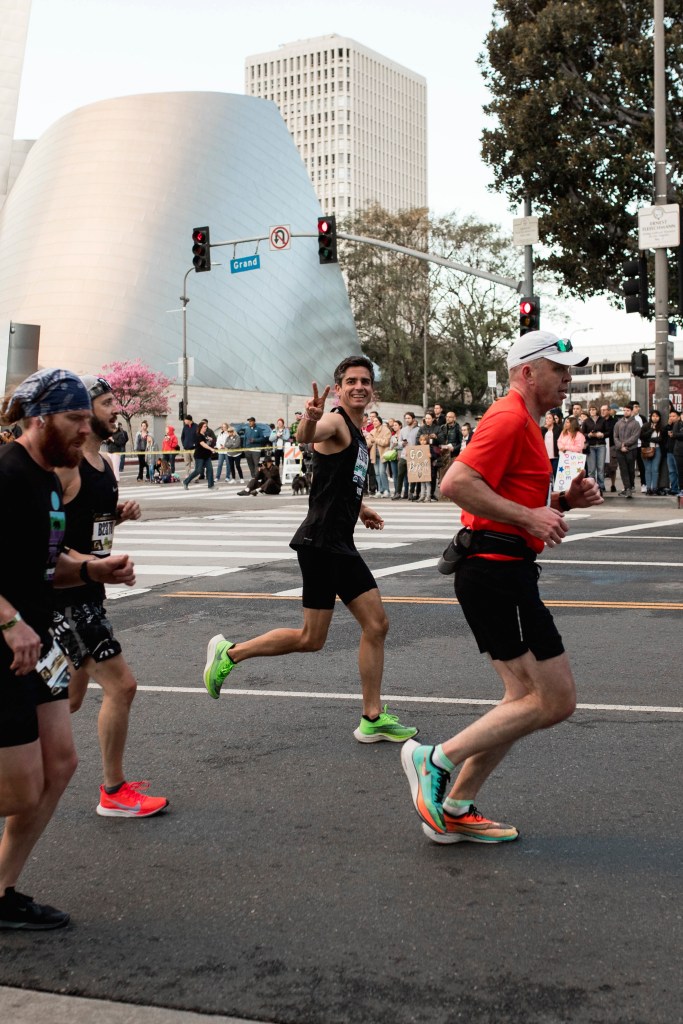
Leggggs: That feeling. That’s it right there. Hard to capture and harder to replicate. But dammit if it isn’t just one of the most amazing feelings.
How about, then, the worst run ever?
CB: Usually I enjoy bringing running gear on trips, to go out and explore. Once I shot advertising for a questionable client: a cruise ship company. I did a few runs on their “running track” which was a joke anyway. While I was on this steel deck, seeing the smoke and fumes come up, it felt so wrong. I stopped.
Leggggs: If I’ve learned anything from working with a coach, there’s a lost art to the act of “calling it.” Pro move.
Trail running in the Alps is probably on a lot of peoples’ bucket lists to run, but where is yours?
CB: Maybe the Speed Project some day, but more than a place I’m always stoked to get to go on runs with people I met through running over the past years.
Leggggs: I will do TSP with you, if ya want. Just sayin. That’s on my list, way up at the top, too.
Do you have any quote or, er, mantra, that you repeat to yourself during a run when things are getting real?
CB: During the L.A. Marathon there was a patch where people slowed down and I had a low too, so I tried Formula One radio style and to race engineer myself through the crowd: Mode push, mode push. Pick up the pace!
Mode push, mode push. Pick up the pace!
Leggggs: What would you tell someone looking to give running a shot? (Basically, what no-bullshit advice would you say to inspire a person to start running that you can’t get from a Runner’s World or other popular “how-to” articles…)
CB: It seems the most common advice is how to distract yourself, a playlist for your run or how to break up the run so it’s more entertaining.
I’d go in the opposite direction, run with no music, and make it a challenge to spend time with yourself. It became so rare for us to do one thing without being interrupted.
Make it a challenge to spend time with yourself. It became so rare for us to do one thing without being interrupted.
Leggggs: Want to let that resonate for a second… Make it a challenge to spend time with yourself. Damn.
Ok… We spoke to personal wellness and a “body in motion is a happier body,” but what do you find to be the main benefit of running regularly?
CB: You’ll develop a better sense if you really feel good and become better at recreating those circumstances to feel good.
Leggggs: What else do you use your time running to “do?” (win arguments, be creative, zone out, meditate, etc.)
CB: Zone out, and chew on some thoughts. I don’t do much. Sorry, I wish I had a better-sounding esoteric line for you.
Leggggs: That is esoteric enough, my man. Speaking of, do you think there are some lesser-known/unexpected benefits of running that people may not readily see until fully committing to the sport?
CB: The community of this otherwise solo sport.
Leggggs: Well put.
Speaking of community, I’ve never been to Munich, but it’s on my bucket list, which I am sure everyone says. What’s the running scene like there? High points? Where it can improve?
CB: I think a lot has happened over the past years. There are some super nice crews and every now and there there’s an unsanctioned race going on.
In general, Germany is so soccer-focused. The sports culture isn’t near anything you see in the US.
Leggggs: Staying in Munich, what keeps you running there? The scenery? The people? The terrain? What about Munich makes it fun to run for you?
CB: I leave my house and am in the park and quickly down by the river after just a block or two. It’s just how easy it is to get a great run in.
Leggggs: Come to Portland. I feel it’s sorta the same way… But what do I know? I run the same route every single day. But if I did break out of my routine, and I moved to Munich tomorrow (it’s not too silly of an idea right now), what should my first steps be in becoming an active participant in the local running scene? (who do I need to talk to? What clubs should I keep an eye out for? Where do you meet new people? etc.?)
CB: DM me of course or just the usual places. Some brands offer running clubs. You’ll find the local and independent ones on Strava and you’ll quickly run into like-minded people here. No problemo.
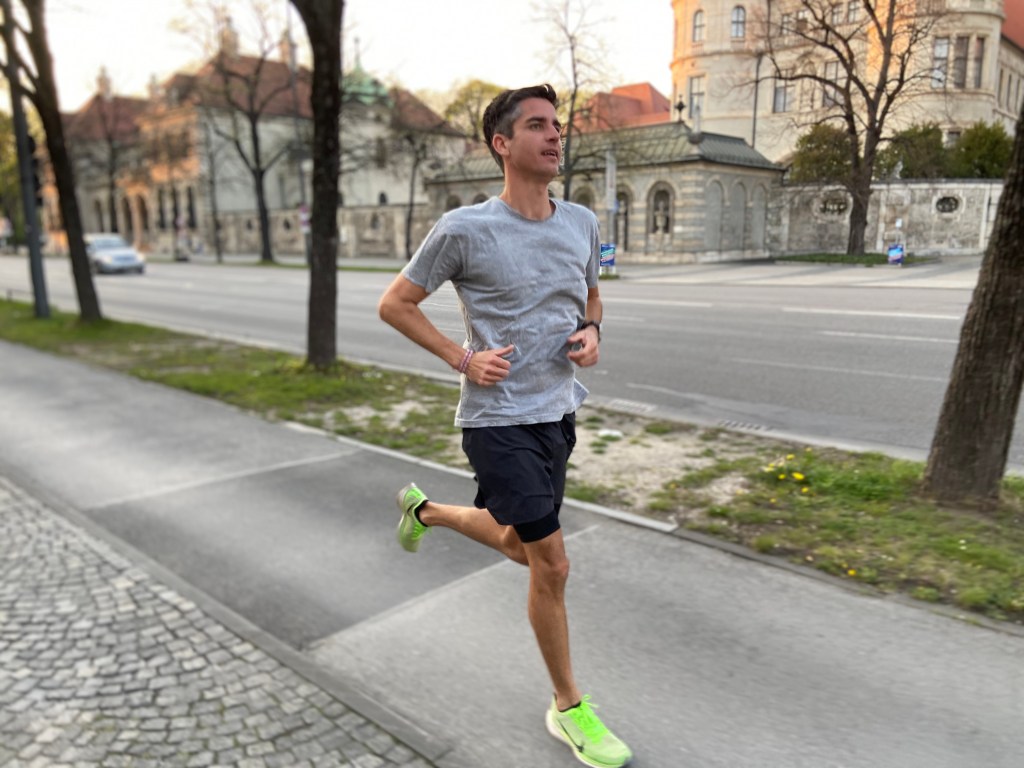
Leggggs: Bags are half-packed. Just deciding on which singlet…
Do you feel as though running is an accessible sport? If so, why? If not, what does it have to do to improve its accessibility, if anything?
CB: I sure hope it’s perceived as accessible. It might not always seem so with all the talk, tech and premium gear. Not too long ago people used their most worn out stuff for jogging and really, you don’t need much to get started.
Not too long ago people used their most worn-out stuff for jogging and really, you don’t need much to get started.
Leggggs: I remember my buddy, Jeremy, telling me about Near Earth and saying how amazing the socks were. I promptly ordered a pair (or really, my wife got me a pair for christmas), and I can attest to the quality., but now I can’t unsee it, in the best of ways.
What is, in your words, Near Earth, if you were to describe to someone with no idea? Why does it exist?
CB: Near Earth is a running brand, the first product is the Distance Running Sock. Developed with an essentialism approach, looking at what’s really needed and making that well. A lot of thought went into this, the goal is that these socks just work for you and don’t need them explained with fancy words.
The goal [of Near Earth] is that these socks just work for you and don’t need them explained with fancy words.
Leggggs: Why focus on socks? What are you hoping to accomplish or add to the world of running through Near Earth?
CB: The simplicity of running is awesome – shoes, shirt and shorts. Socks are a piece of that puzzle. Especially with the leap in development shoes have made in recent years, it just makes sense to pair your shoes with socks that complement the experience you’re getting out of these cushioned midsoles and highly engineered uppers.
Leggggs: That simplicity. I like that you’re peeling it back to the roots. You don’t need much. But what you do have, make it work the best.
What do you hope people “take away” from Near Earth when they snag a pair of your socks?
CB: When you made the effort for a more considered decision to buy better for something that, to me at least, socks falls into an essentials category. It’s totally fine if you don’t think about it much anymore after the purchase. But if you do take a second look, you might find some details and story ideas on Near Earth socks and I hope it reminds people that a lot of thought and care went into them.
Leggggs: That right there is what separates a brand from a company. And to get deeper into your story, where’d the name come from?
CB: In ancient Egyptian mythology there’s this concept of chaos and balance. I was fascinated by that, perhaps because I felt like I was getting attacked by the god of chaos daily when I developed the socks. The god’s name is mouthful, when I researched some more, I found an asteroid named after the god. The first calculations predicted it would strike the earth, luckily it would just pass us very closely, making it a near-earth object – when I read that, I was just like, “Yup, that’s it.”

Leggggs: I didn’t go into this interview thinking about our ultimate end as a species, but here we are. Speaking of, what’s the endgame for Near Earth?
CB: Participate in running and making stuff you can rely on.
Leggggs: Anything you can share about what’s on the horizon?
CB: I really respect the race day kit, the carefully selected gear people pick and trust for their races, you know the sleek and tight-fitting gear, that signals you it’s go time when you put it on. We’re working on something to take it up a notch.
Leggggs: Finally, any shoutouts?
CB: Near Earth might be the smallest running brand on the planet, but there’s been a ton of support from the running community and beyond. You know who you are, thank you!
MASSIVE thank you to Christian for sharing his time, stories, and insights. Throwing the challenge out to you to go be with yourself.
Stay tuned on Near Earth
- IG / near.earth
- web / Near Earth


 Leggggs